Fundamentals
17 cardsWorkspace, blocks, pages, sharing, guests and groups. The pieces every Notion user should understand from the beginning.
- Workspace
- Block
- Teamspace
- Publish
- Guest
- Favorites
So we made 52 cards: one Notion concept on each, and on the back a question, a fact, a task or an excuse to talk to the person next to you.
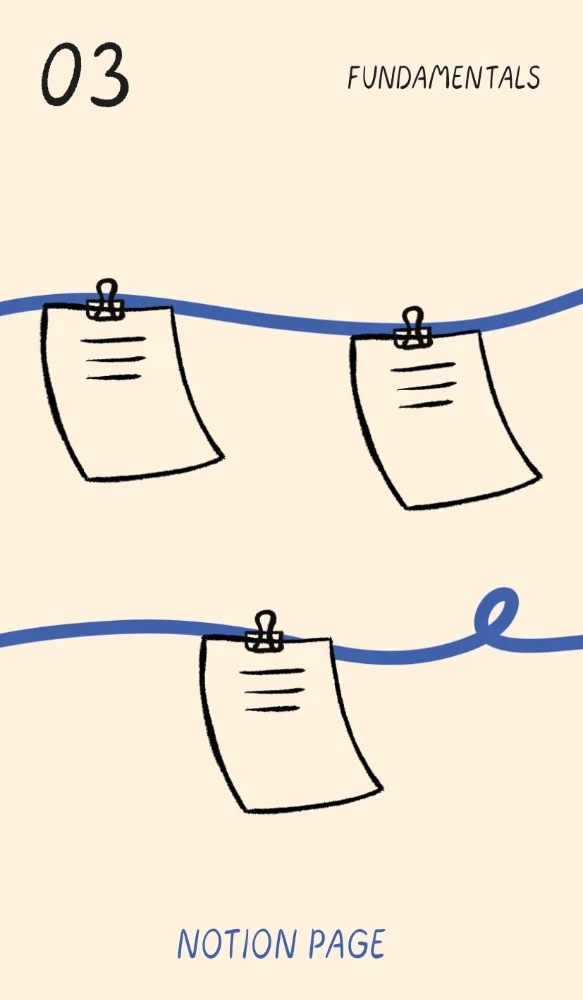
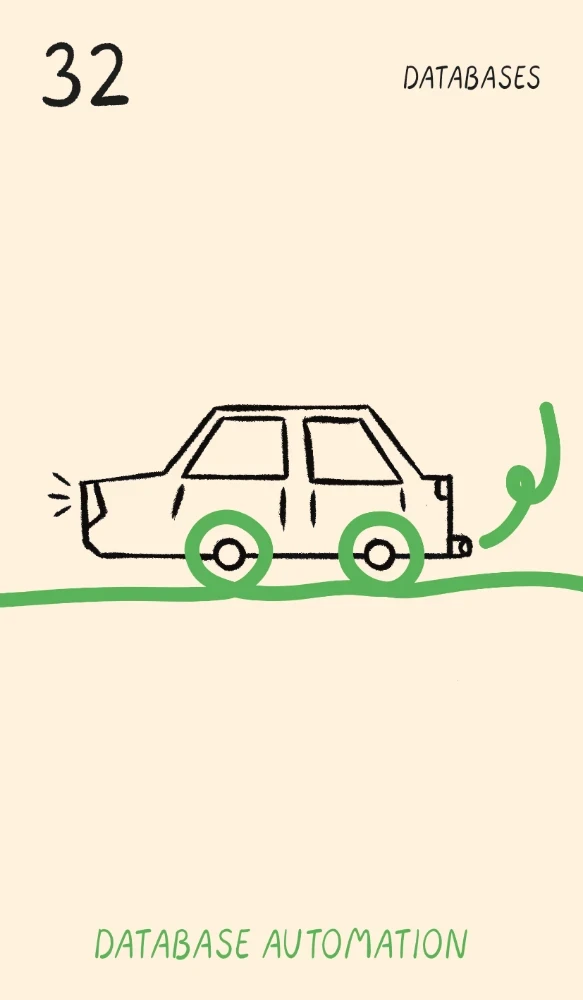
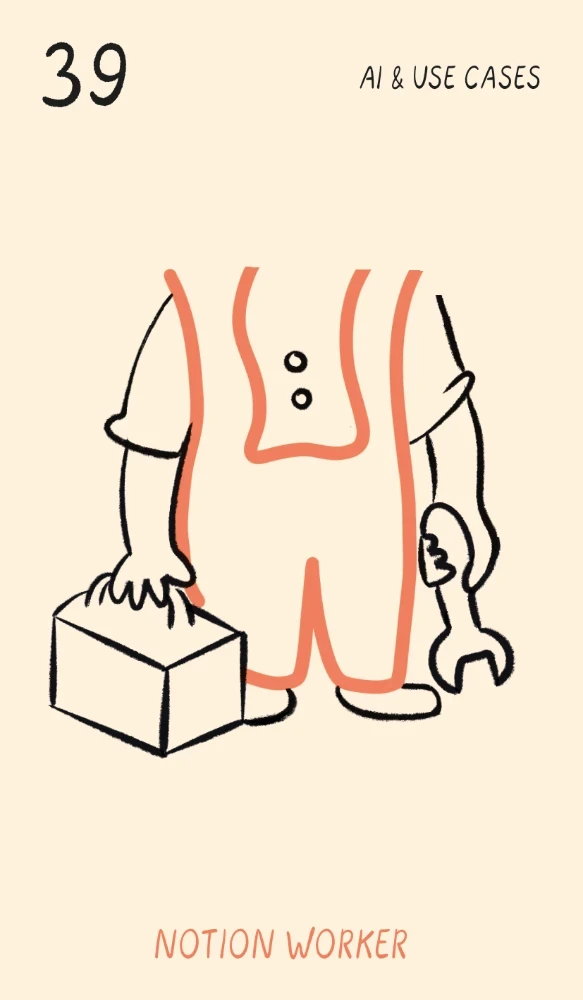
Workspace, blocks, pages, sharing, guests and groups. The pieces every Notion user should understand from the beginning.
Properties, relations, rollups, formulas and every database view. One of the most powerful Notion blocks, if not the most powerful.
Notion AI, custom agents, Workers and skills, plus the systems people build with them: CRM, projects, knowledge base.
 Question
 Helps you look at your own workspace.
“Do you currently manage your contacts, leads, or clients using a CRM built entirely in Notion?”
 Fact
Fact A little extra bit of knowledge.
“Every row in a Notion database is also a page. Open it and you get a full page, with its properties on top and room for anything below.”
 Do
Do A small task to try in Notion right now.
“Create a group for your Marketing team. You can do this from your workspace settings.”
 Connect
 A reason to talk to the person next to you.
“Can you spot a Notion Consultant? Connect with them!”
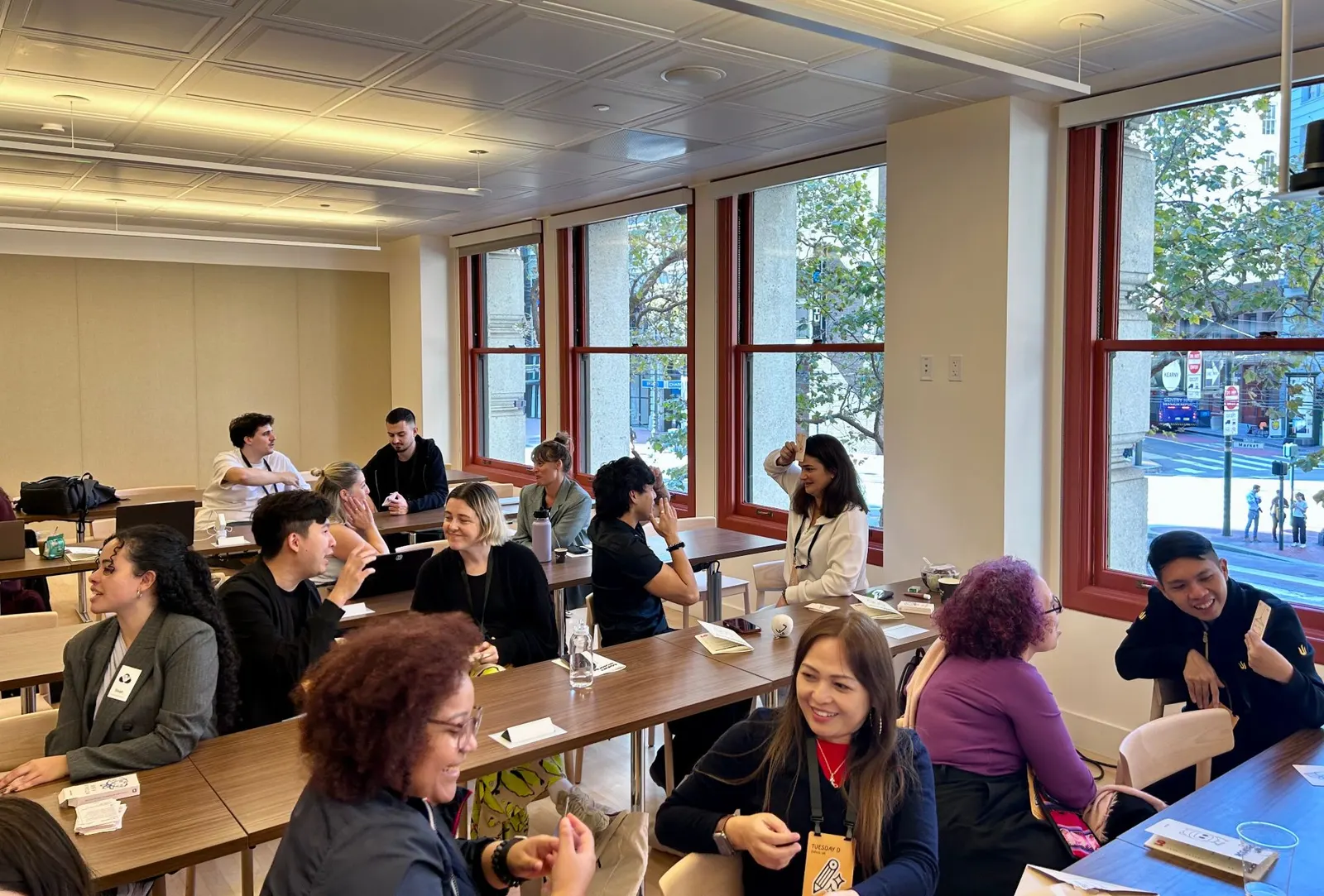
We took the deck to the Notion Ambassadors Summit 2026, at Notion HQ in San Francisco.
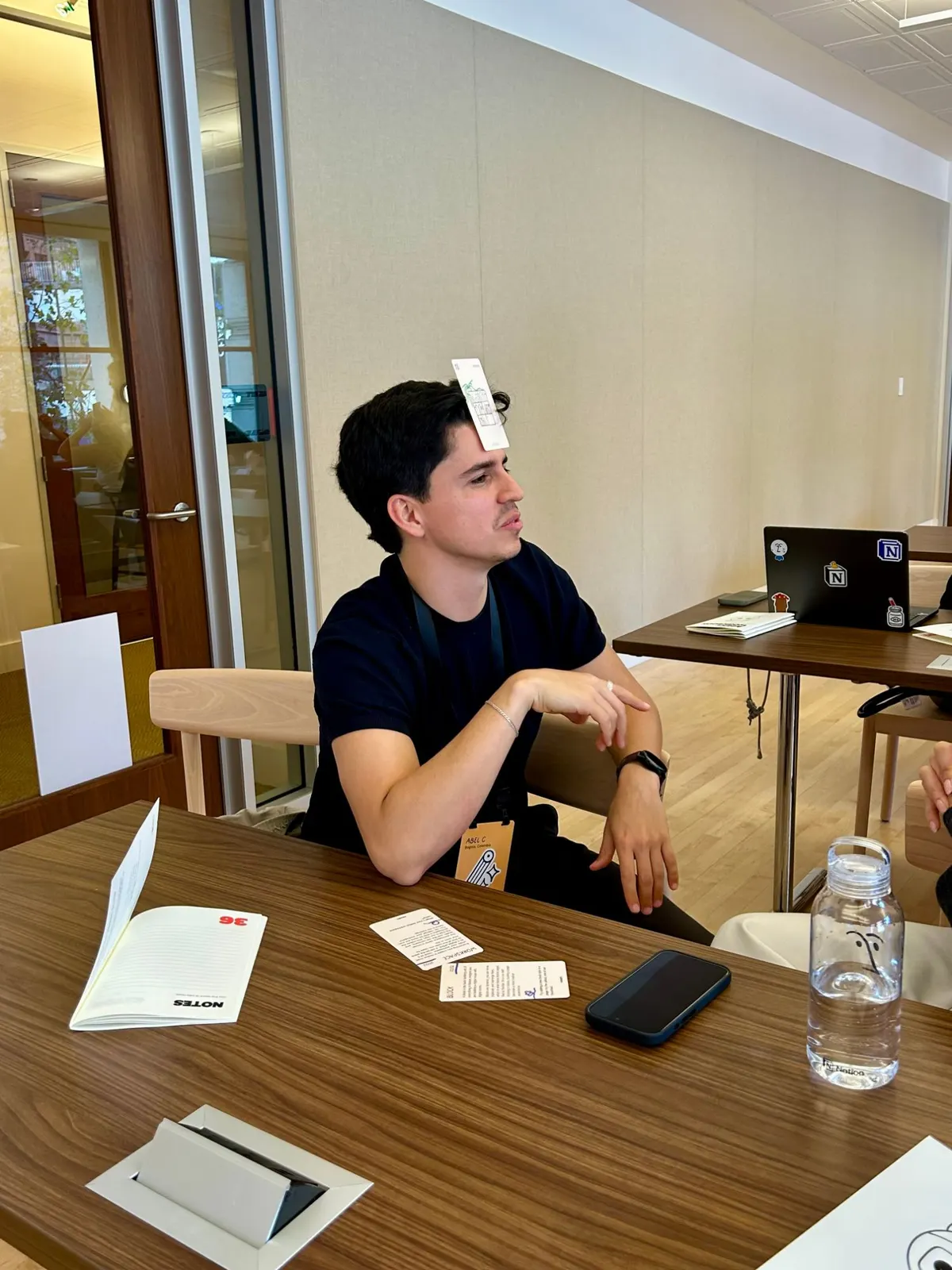
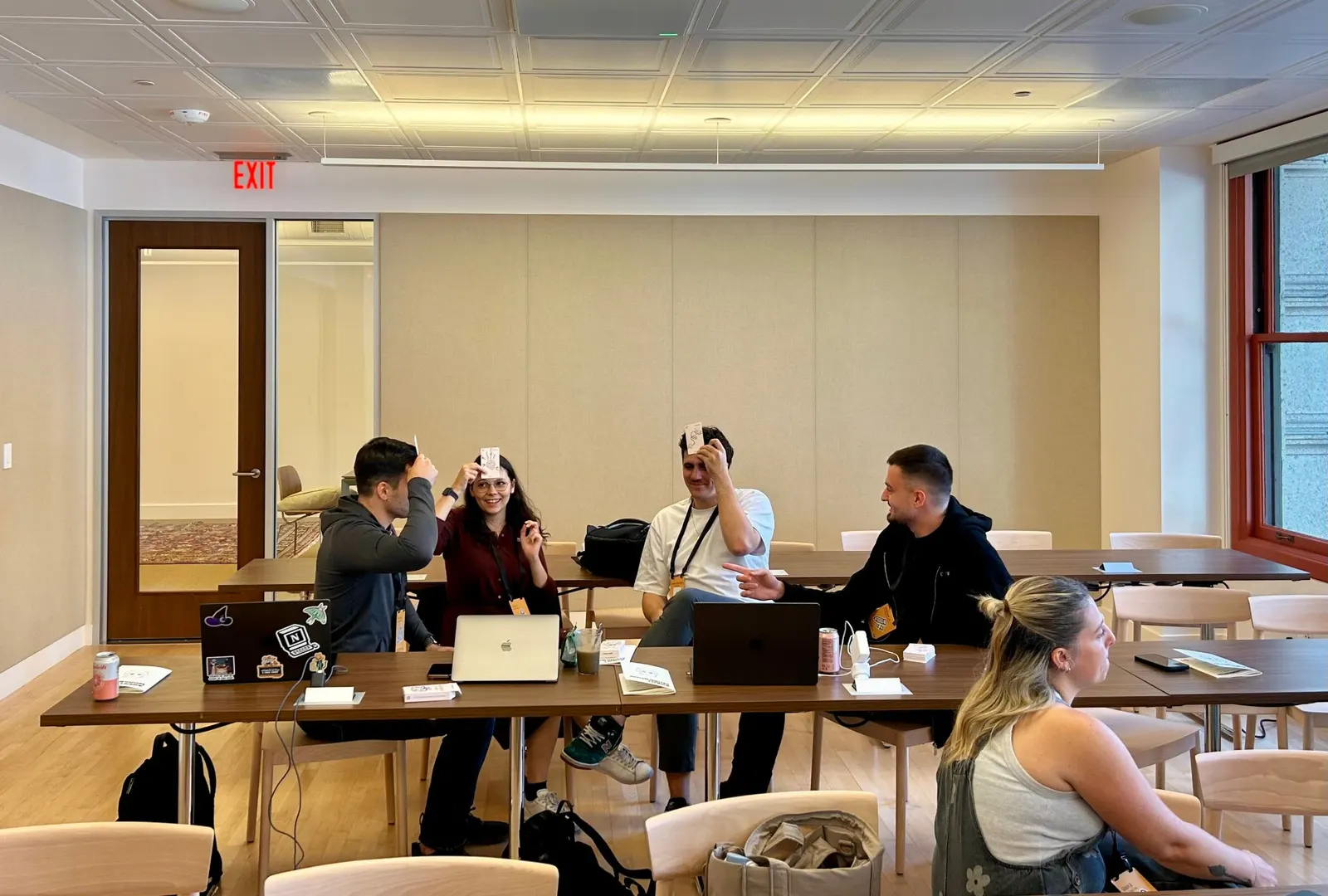
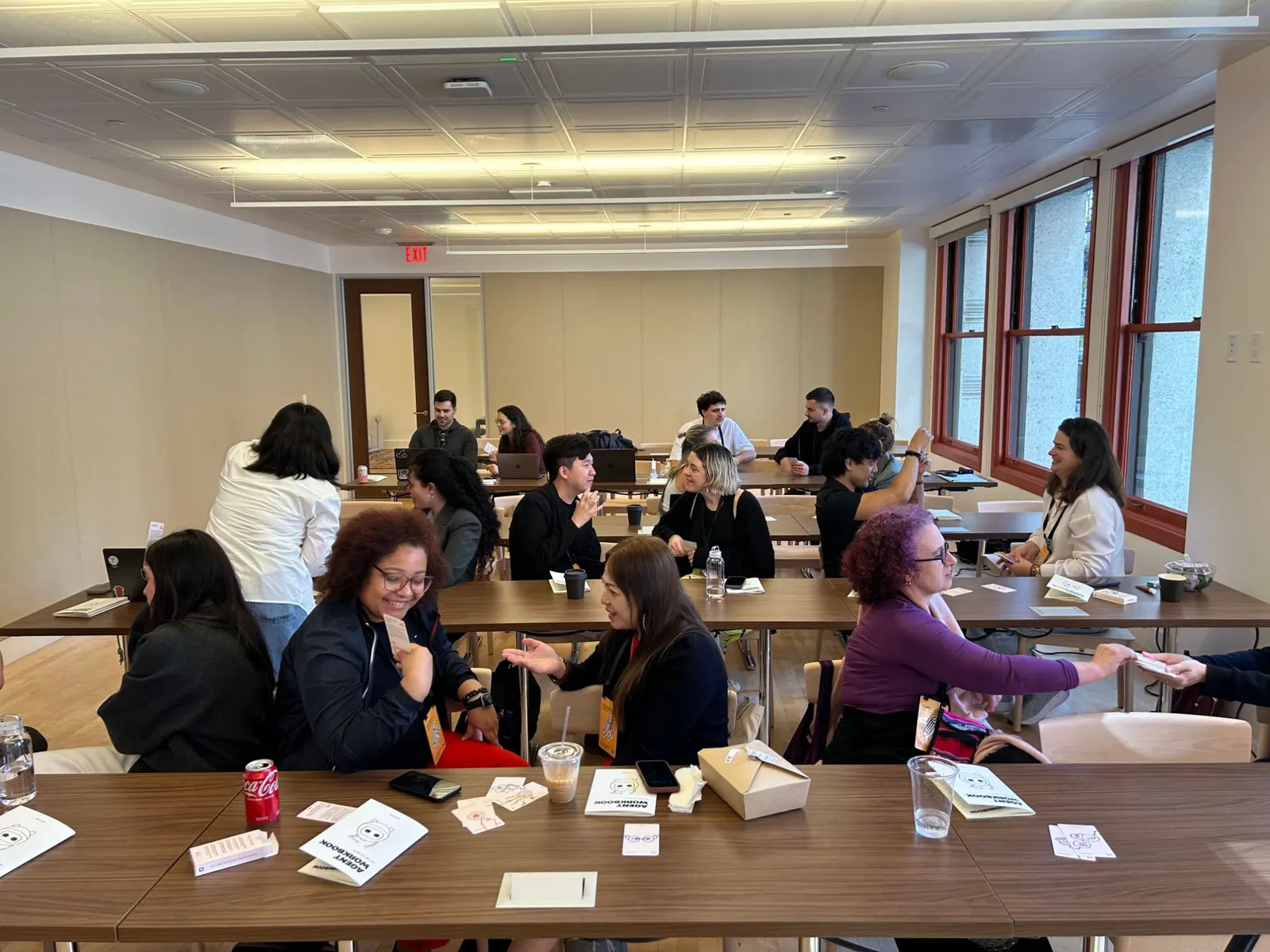
Each of the 52 illustrations was drawn by hand by Alejandra.
Scroll sideways and tap a card to flip it.
Every game uses the same deck. Pick a size, check the time and the cards you need, and open the rules.
The illustrations are clues. Whoever names the Notion concept first wins the card.
Host tip: For a beginner crowd, say three possible answers out loud before people guess.
One person answers a Question card about their own workspace, and everyone else gets one follow-up.
Host tip: Online, ask the person in the hot seat to share their screen while they answer.
Each team designs a workspace for a fictional client using only the concepts in their hand.
Host tip: Halfway through, let each team swap one card with the other team.
Everyone draws a Do card, builds it in Notion in five minutes, then shows the result.
Host tip: Pair a beginner with a more advanced user so nobody gets stuck.
The reader either reads a real Fact card or invents a believable fake one, and the group votes.
Host tip: The best fakes sound like a real feature announcement.
The opening mixer from the deck. Find someone with your color, talk through both cards and swap.
Host tip: Run it while people are still arriving. It needs no explanation beyond the first sentence.
Three tables, one per theme, each running a Question, Fact, Do and Connect round with its own cards.
Host tip: Seat beginners at the Fundamentals table and power users at AI & Use Cases.
Trade cards to complete a set. You can only trade after explaining your card to the other person.
Host tip: Announce a bonus for anyone who trades with someone they have never met.
Speed dating for Notion concepts: teach your card in three minutes, then move one seat.
Host tip: Keep a bell or a gong. The sound does half the facilitation.
Teams order ten cards from what a beginner needs first to the most advanced concept, then compare.
Host tip: Ask each team to name their path, like a course title. It makes the comparison fun.
Your partner is the person whose card number adds up to 53 with yours: 1 and 52, 2 and 51.
Host tip: With an odd count, remove a pair before dealing (for example 26 and 27) and join the leftover person to a pair yourself.
With two decks, every card has an identical twin somewhere in the room.
Host tip: Put the unused cards on a table so late arrivals can grab one.
A 3 × 4 grid of themes and types. Every cell has 4 or 5 cards behind it, so no square is dead.
Host tip: Offer a prize for the first full card, not just the first line. It keeps the room mixing longer.
Project the illustrations on the screen. Tables write down the concept, and Fact cards are bonus rounds.
Host tip: Give each table a team name linked to a Notion concept. Reading them out is a laugh.
Everyone lines up in card-number order without speaking. Then neighbors introduce each other.
Host tip: Point out the borders: 17 and 18, 35 and 36. That is where the themes change.
Use these splits for any game above, or to form working groups for the rest of the event.
| Split by | Groups | How |
|---|---|---|
| Numbers that add up to 53 | 26 pairs | 1 with 52, 2 with 51, and so on |
| Theme | 3 groups | Fundamentals 17, Databases 18, AI & Use Cases 17 |
| Card type | 4 groups of 13 | Question, Fact, Do, Connect |
| Number blocks | 13 groups of 4 | 1 to 4, 5 to 8, and so on |
| Theme and type | 12 groups of 4 or 5 | For example, Databases and Question |
| Two decks | 52 pairs of twins, up to 104 people | Find the person with the same card |
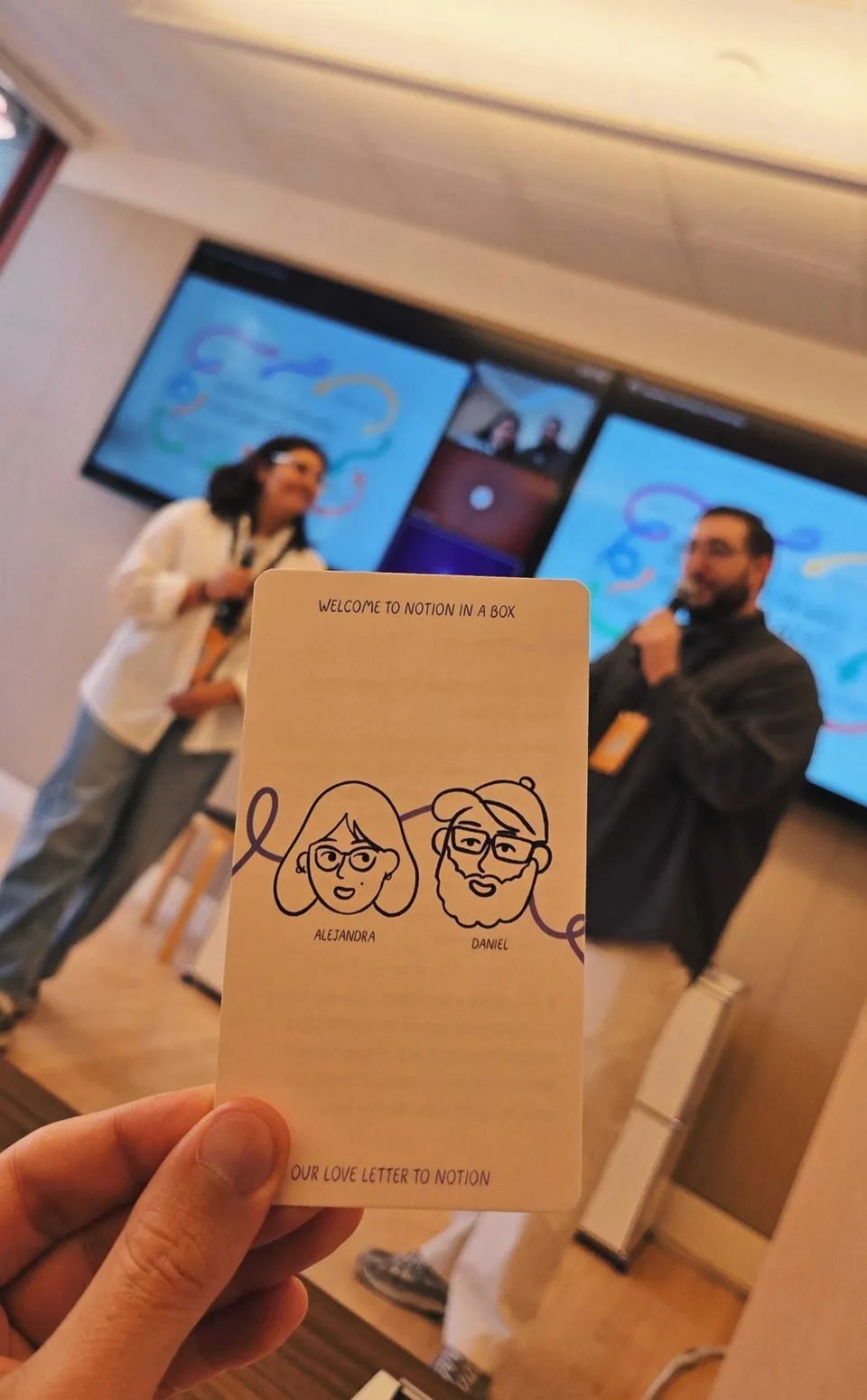
We're Notion Consultants and Ambassadors, and this deck is our love letter to the tool. We hope it helps you fall for Notion too.
Limited drop
This is a real limited drop, not a marketing stunt. Leave your details and tell us how you would use the deck. We will write to you first when we decide how to release it.
Takes one minute. No payment, no commitment.
Very few. We printed one small batch in Estonia, and we will not reprint until we know there is real interest.
Nothing, until we decide how and when to release the decks. Then you hear from us before anyone else.
Not yet. We are using the waitlist to decide how to release the batch. If you run a meetup or a team training, say so in the form so we can prioritize accordingly.
The decks ship from Estonia. Tell us your country in the form, including if you are outside the EU, and we will check what is possible.